
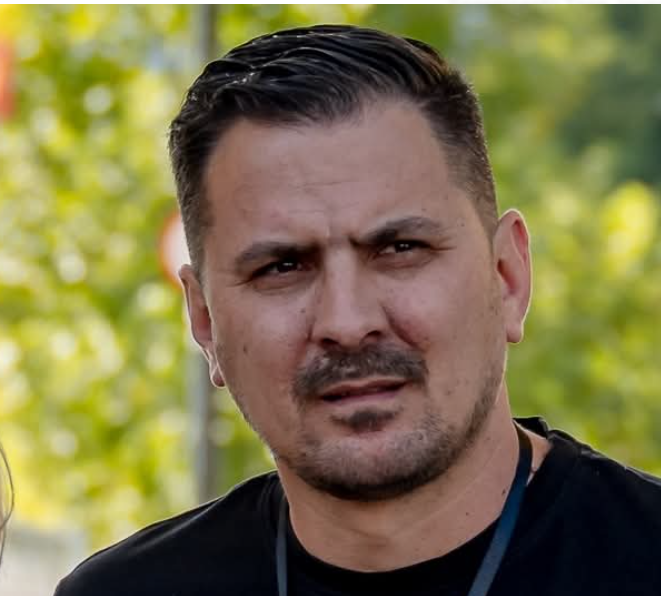


Marius Geantă, the president and co-founder of Centre for Innovation in Medicine, spoke on the talk show “Reporter 24” about people’s tendency to give primacy in trusting false information, rather than real one. “False information is also packaged in an attractive way. I attract you, I’m like a black hole,” the expert sums it up.
The association leaded by Marius Geantă was among the few entities that, at the beginning of the COVID-19 pandemic, pointed at the importance of communicating the information to the general public.
“Let’s give things a little historical perspective (…). We started writing about what was happening in China in January 2020. I remember an interview I did on Radio Romania Cultural, in January 2020, and at that moment I was talking about how two viruses had already started to circulate – NCoV19, which hadn’t been called SARS-CoV2 yet, and the second was the media virus. That’s how I called it back then. Why? Because this topic, by happening in China, had become highly politicized. That’s on one hand. On the other hand, all kinds of information had begun to circulate, including disinformation, information about the virus as well, information about the illness, which was not necessarily accurate. And I realized, that very moment, that we were actually facing a double challenge. The first was the medical challenge, and the second one was on communication. This is the reason why I’ve been an active presence ever since the beginning of the pandemic,” says Marius Geantă.
The bad start in terms of communication two years ago led to a low vaccination rate of the Romanian population, resulting in the country’s ranking in the Top 10 fatalities caused by COVID-19.
“What I didn’t know back then, in January 2020, was how much the communication would impact the vaccination campaign against COVID-19, the compliance with measures under critical situations – the distancing measures, wearing the mask and so on, and ultimately, how it would correlate, with a very high mortality in Romania caused by COVID-19. Romania and the Eastern European countries, excepting one Latin American country, are in the top 10 COVID-related fatalities”, says Marius Geantă.
Romania and the Eastern European countries, excepting one Latin American country, are in the top 10 COVID-related fatalities
He further says that another way in which the pandemic was ridiculed, was by bringing conspiracy theories into mainstream media, which otherwise would not reach this audience.
“One of the big mistakes we made in our area during the pandemic was to draw attention to all these conspiracies. I’ve been asked in interviews what kind of conspiracies are circulating and I said that the ones creating them should be the ones questioned. The second thing was the association of a figure with a solid scientific background, a solid scientific discourse, with another completely irrelevant figure. Unfortunately, we have seen this mistake in the pandemic; from a scientific point of view, there has never been such an idea of being pro and against the vaccine. However, we have seen too often pros and cons regarding the vaccine on social media, and on TV, in various debates, in which the “pro” was a doctor, and the “against” party was someone with a completely different background, with no qualifications or training in the field,” says Marius Geantă.
Marius Geantă also points out that it was only a matter of time before Romanian society became polarized on the issue of the pandemic, as it has done with every issue of national impact over the past 30 years.
“I said it, I think it was before the war started and at a moment during the pandemic, it is a fact – the societies are divided. Not only in Romania. And the division awaits only for the next reason in order to manifest itself. During pandemic, at the beginning, you remember, this division did not exist, it did not manifest itself. It was a waiting period. People were scared, afraid of death, of the unknown. We had this, and then all it needed was one voice saying we have the vaccine, another voice saying something entirely different, and things started to heat up.
This was visible in the polls and was also seen by many people from the decision-making area, politics, media, audiences and so on. And then we had a thread of scientific communication that worked very well at certain times, but unfortunately it was overshadowed and intersected a lot by other interests. Some were commercial, some positional, some electoral. Let’s not forget that we also had election rounds. It’s a dynamic we’ve seen in many countries, not only in Romania,” he notes.
The war in Ukraine was another topic that divided Romanians.
“Now, the war in Ukraine is the next issue on which we see, lately, division. Without knowing as much about war as I do about pandemics, there is something that is quite obvious, this very moment as we speak – polarization. What I have noticed indeed is this idea of reductionism, and there may have been people who did not deny COVID, but they downplay it – never mind, it’s just flu. The effect, in fact, is the same. This is what we see now as well. Another interesting phenomenon is that from a media and social point of view, the pandemic ended when the war started. These are facts,” the expert concludes.
Marius Geantă explains that false information is packaged in such an attractive way for the public that it is next to impossible for it not to achieve its goal.
“False information is also packaged in an attractive way. I attract you, I’m like a black hole. Something pops up on Facebook and it’s all caps, exclamation marks, an emotive picture. You have to own, which is complicated, your personal system to protect yourself in such situations. To the greatest extent, the pandemic has probably brought this false information into the light. It probably showed the size of the phenomenon, but it is something that happens on a daily basis,” Mircea Geantă says.
Those most vulnerable to believe false information and disinformation remain the people aged over 50.
“I would recommend to those who are watching us, and maybe we are about the same age, to have a look at their parents’ newsfeed, Facebook accounts. I did that. Less than ten percent of the accounts are something that tells me that we are living in a bubble and our parents may be living, simply because of their age and environment, in a different bubble, of which people are taking advantage,” Marius Geantă adds.
I would recommend to those who are watching us, and maybe we are about the same age, to have a look at their parents’ newsfeed, Facebook accounts.
Marius Geantă, President/Co-Founder of the Centre for Innovation in Medicine
Full interview below:
https://youtu.be/rlQQz5M_3Fc
This initiative is endorsed through the SCIENCE + project, carried out by Free Press For Eastern Europe, which aims to support the establishment of a single network for sharing the best practices in health and science journalism in six Central and Eastern European countries: Czech Republic, Poland, Hungary, Slovakia, Bulgaria and Romania.